
Silence Isn’t Alignment—It’s a Warning Sign
(The Hidden Cost of Authority-Based Leadership)
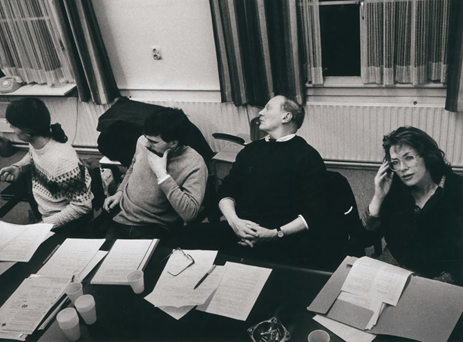
Photo by Europeana on Unsplash
By Kerri Gentry
There was a period in my work where leadership was defined almost entirely by authority.
The expectations were clear: follow directions, don’t question, and get the job done. On the surface, things appeared to function. Tasks were completed, policies were enforced, and there was a sense of order.
But underneath, something very different was happening.
People were afraid.
Not in an overt or dramatic way, but in the quiet, everyday choices. Staff chose their words carefully. Questions went unasked. Concerns were filtered—or withheld entirely. The safest path was compliance, not contribution.
I remember sitting in meetings where decisions were presented that clearly weren’t going to work operationally. You could feel it in the room—people shifting in their seats, avoiding eye contact. A few of us would exchange glances, silently acknowledging the issue.
But no one said anything.
Not because we didn’t see the problem, but because speaking up didn’t feel safe—or worth the risk.
That fear wasn’t imagined—it was reinforced.
There were times when a staff member offered feedback instead of simply following direction. In response, I was given a script and instructed to terminate that individual. The message was unmistakable: speaking up had consequences.
Over time, the environment itself became unsafe.
There was a constant undercurrent of uncertainty—people felt like they were always looking over their shoulder, waiting for the other shoe to drop. Instead of focusing on doing good work, energy was spent trying to avoid doing the wrong thing.
People were operating in survival mode.
And when people are in survival mode, everything narrows. They don’t collaborate—they protect themselves. They don’t take initiative—they minimize risk. They don’t speak up—they stay quiet.
The impact became visible.
Ideas stopped coming. Initiative disappeared. Even highly capable people began to second-guess themselves or disengage. What had once felt collaborative became transactional. People showed up, did what was required, and left.
What struck me most was how this approach created the illusion of effectiveness.
From the outside, it looked like strong leadership. Decisions were made quickly. There was little visible resistance. But the absence of resistance wasn’t alignment—it was silence. And that silence came at a cost.
Without open dialogue, problems surfaced late—if at all. Small issues grew into larger ones. Trust eroded quietly. The sense of “team” dissolved. There was no shared ownership—only compliance.
In an environment like this, trust in leadership doesn’t just weaken—it disappears.
People don’t put themselves out there. They don’t take risks or use their strengths fully. They don’t offer honest feedback or creative solutions. The organization may continue to function, but it does not grow. It becomes constrained by fear and uncertainty.
That experience reshaped my understanding of leadership.
Authority, while sometimes necessary, cannot substitute for relationship. It may drive short-term results, but it does not create the conditions for trust, engagement, or shared responsibility.
What was missing was not structure—it was connection.
There were few opportunities for people to feel heard, valued, or safe enough to speak honestly. Leadership did not invite perspective; it directed action. Without psychological safety, people focused on protecting themselves rather than contributing fully.
Effective leadership is less about control and more about creating an environment where people feel safe enough to engage—where they are willing to think, speak, and contribute fully. Where trust is built intentionally, not assumed. Where leadership is shared, not tightly held.
The shift from authority to relationship is not about losing control.
It’s about creating the conditions where a team can actually exist.
Kerri Gentry a a CCLA colleague and a part of our media team, is a licensed social worker, therapist, and executive leader with 20+ years of experience in aging and caregiving services. She specializes in developing person-centered programs, leading multi-site operations, and supporting older adults and families—especially in dementia care—with a practical, compassionate approach.