
When Pressure Takes the Wheel
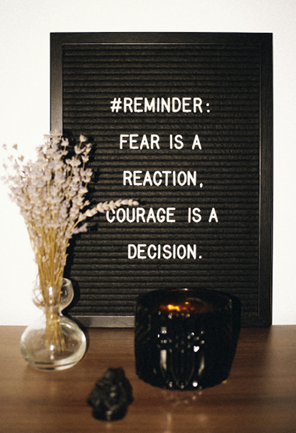
Photo by Cosmin Ursea / Unsplash
The moment leadership becomes something else.
Many of us would characterize what we experience as Command and Control as ineffective leadership.
We might even attribute it to bad intent, but that’s rarely the case.
Most times, these approaches to leading others begin with pressure.
Something is at stake.
Time is short.
The outcome matters.
And in that moment, something shifts.
Options narrow.
Voices quiet.
The focus moves from understanding what’s happening…to managing it.
It can look decisive.
It can feel necessary.
It can even look like leadership.
But often, it isn’t.
What surfaces in those moments isn’t leadership; it’s a reaction—
to pressure,
to uncertainty,
and very often, to fear.
Fear is a trickster.
It doesn’t always announce itself. It rarely sounds like panic.
More often, it shows up as:
urgency
control
certainty
the need to “move things along”
It shows up as decisions made quickly.
As direction replacing inquiry.
As answers replacing questions.
Because waiting feels uncomfortable.
This is where illusory leadership can take hold.
Because from the outside, command-and-control behavior can look strong:
someone’s in charge
something’s happening
decisions are being made
But underneath, something else has taken the wheel—
not clarity.
Not shared understanding.
Not the work itself.
Fear.
And here’s the harder truth:
This isn’t about “those leaders.”
It’s about all of us.
Under pressure, we typically don’t default to our best thinking.
We take the path of least resistance.
We default to what’s easy.
And for many of us, what’s easy looks like:
control over curiosity
action over understanding
certainty over exploration
Command and control can feel like an easy fix.
Except that it isn’t.
It may create movement.
But it rarely creates alignment or commitment.
It may produce decisions.
But not always better ones.
And over time, it can quietly erode:
trust
contribution
collaboration
So the question isn’t:
“Why do people lead this way?”
The question is:
“What’s happening in the moment that makes this feel like the right move?”
Because if we can begin to see that—to notice the shift as it happens—
then something else becomes possible.
Not the absence of pressure.
But a different response to it.
Courage.
And in the presence of courage, the illusion begins to break.
Command and control loses its grip.
A conscious choice to be courageous—
that’s the beginning of the end of illusion.