
Real Leadership Holds
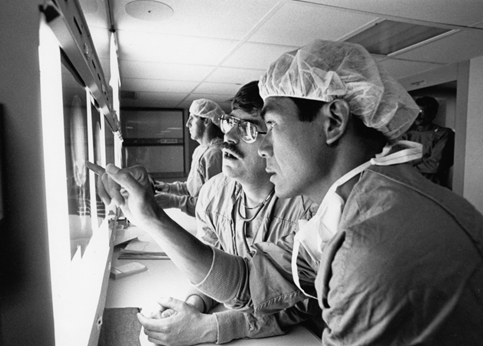
Photo by Navy-Medicine on Unsplash
Earlier this week, we looked at a kind of leadership that can fill the sky.
Commanding.
Decisive.
Compelling in the moment.
The kind that works—
especially in the right conditions.
Today, something different.
Dr. Michael (Robby) Robinavitch, Chief of Emergency Medicine at the fictional Pittsburgh Medical Trauma Center in the HBO Max series, The Pitt.
No spectacle.
No raised voice.
No visible need to take control of the moment.
And yet—watch what happens around him.
Not at a distance.
Up close.
In the small space around him—
with a patient,
with a resident,
in the middle of uncertainty.
People steady.
They think more clearly.
They speak more honestly.
They step in.
Not because they’re directed—
because they’re able to.
He doesn’t create motion.
He creates conditions.
And over time, those conditions become something more.
The ER begins to function like a foundry—
not just a place where medicine is practiced,
but where people are formed through the work itself,
where judgment is shaped in real time,
where experience is shared,
where people learn by participating, not just observing.
In those moments—
how he listens,
how he decides,
how he responds—
something is being passed on.
Not just knowledge.
Not just technique.
Something deeper—
judgment.
And in doing so, something emerges that doesn’t depend on the environment:
Trust.
Not declared.
Not imposed.
Felt.
It holds—
whether the moment is intense or ordinary.
It raises a different question than the one we asked on Monday:
If leadership only works in certain conditions…
What does leadership look like in the small spaces
where people are actually learning how to lead?
—
Field Note:
Where have you experienced leadership up close—
in the moments where something was quietly passed on?