
When the Shouting Ends: On Illusory Leadership
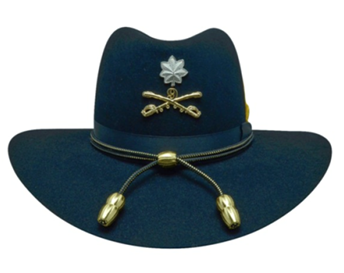
Actually…
There’s a moment in Apocalypse Now—not in the noise, but just after it.
When the shouting ends.
Helicopters have swept in low over the water. Wagner’s “Ride of the Valkyries” has filled the sky. The air has been thick with motion, sound, and force. At the center of it all is Lieutenant Colonel Bill Kilgore—calm, confident, and completely in command.
He is decisive.
He is fearless.
He creates momentum where there was none.
People move when he speaks.
It’s hard not to be drawn in.
Kilgore looks like leadership.
He feels like leadership.
He works—at least in that moment, in that environment.
And only there.
And then, almost as an aside, after the famous line about the smell of napalm, he turns slightly away and says, almost to himself:
“Someday this war’s gonna end.”
It lands quietly.
Because what he’s expressing is not relief.
It’s not reflection.
It’s not regret.
It’s recognition.
The conditions that make his version of leadership possible will not last.
The war gives him a stage:
• A place where intensity can substitute for clarity
• Where spectacle can stand in for purpose
• Where people become part of the performance
• Where consequences are distant enough to ignore
Remove those conditions—and what happens?
Actually…
What looks like strong leadership may be a performance sustained by the environment.
Actually…
Some forms of leadership don’t travel well. They depend on a particular setting to appear effective.
Actually…
Illusory leadership can be compelling, even inspiring—but it’s fragile. It needs the right conditions to survive.
Many have worked for leaders like Kilgore.
Leaders who are energized by crisis.
Leaders who create motion, but not always direction.
Leaders who are convincing in the moment—and difficult to follow when the environment changes.
The question isn’t whether they can lead in those conditions.
The question is whether what they are doing is leadership—or something that only looks like it.
That distinction matters.
Because leadership, practiced as a craft, does something different.
It creates clarity without needing chaos.
It generates trust without relying on force.
It holds up in ordinary conditions—not just extraordinary ones.
It doesn’t require a stage.
And it doesn’t disappear when the war ends.
Real leadership holds.
It’s still there—
when the shouting ends.